
Roof replacement cost estimates for typical homes range from $9,000 to $28,000 in 2026, but these numbers rarely tell the complete story. Hidden expenses add 15% to 20% to original quotes and catch homeowners off guard. According to the 2026 This Old House Roofing Survey, 14% of homeowners reported their final new roof cost was a big deal as it exceeded what they expected. These surprise charges include structural repairs ranging from $4,000 to $6,000 and disposal fees of $497 to $583 for standard homes. Labor expenses often equal or exceed material costs. Homeowners who understand where the typical cost to replace roof goes beyond base estimates can budget accurately and avoid financial surprises mid-project.
The Hidden Structural Costs Most Homeowners Miss
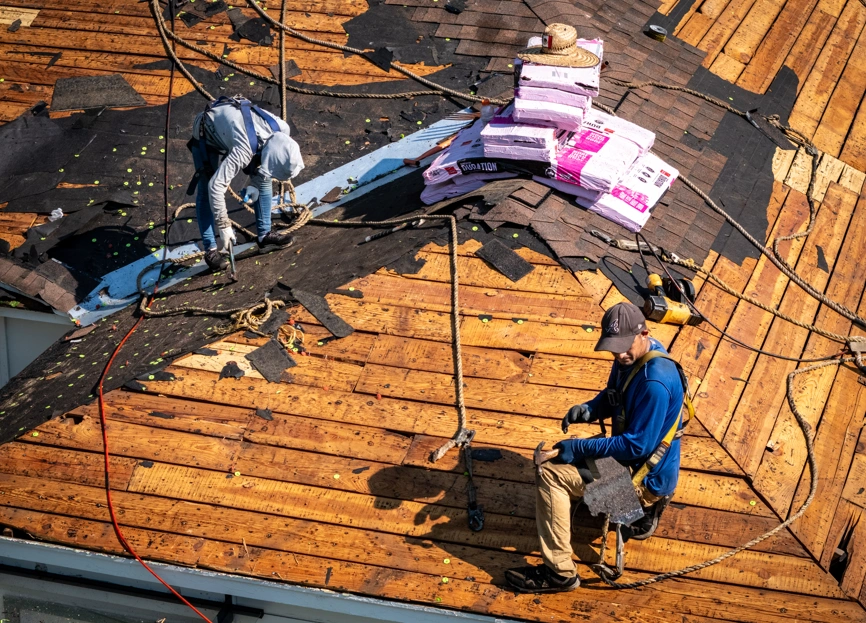
Once contractors remove old shingles, structural issues hidden for years become visible. Nearly 26% of homeowners identify unexpected roof damage as a main cost factor beyond original quotes. These discoveries force immediate repairs before new materials can be installed and turn straightforward projects into complex renovations.
Roof Decking Replacement When Water Damage is Found
Contractors frequently discover rotted or deteriorated decking during tear-off. Water intrusion over years softens plywood or OSB sheathing and requires complete replacement. Damaged decking adds $2.00 to $2.50 per square foot, translating to $64 to $80 per standard 4×8 sheet. Finding 3 to 10 sheets of bad decking on a single job is not unusual. Signs include flaky or spongy wood, sagging between rafters, and visible daylight through boards when viewed from the attic. Minor issues might allow spot repairs, but water damage spreads throughout connected sections typically and makes full replacement the only viable option.
Fascia and Soffit Repairs That Emerge During Tear-Off
Fascia boards and soffit panels deteriorate from prolonged moisture exposure, especially at gutter attachment points. Rotten fascia causes gutters to sag or separate from the roofline because fasteners lose their grip in softened wood. Contractors must remove sections back to solid material and install new boards primed on all faces to replace rotted fascia. Soffit damage accompanies fascia failure because water traveling behind gutters affects both components. Contractors must assess deterioration scope before installation continues, as partial repairs work only when surrounding material remains structurally sound.
Rafter and Truss Reinforcement Requirements
Leaks and moisture infiltration weaken rafters and trusses and compromise structural integrity. Replacing damaged rafters costs $5.00 to $14.00 per square foot, depending on material weight and roof conditions. Older homes with rafter roof structures often need reinforcements to meet current building codes when adding heavier materials or addressing load concerns. Water is the biggest culprit and causes rot that spreads through wood framing. Contractors must replace all water-damaged wood immediately to prevent issues from spreading.
Chimney and Flashing Work That Adds Up Fast
Chimney flashing repair costs between $400 and $1,600, while resealing minor leaks starts around $200. Step flashing runs $400 to $600, whereas continuous flashing systems cost $800 to $1,000. Excessively large or stone chimneys push costs upward of $2,000. Labor averages $75 per hour for professional masons or chimney sweeps. When water has leaked for extended periods, damage extends beyond flashing to include rotted decking ($500 to $1,500), damaged underlayment ($300 to $800), and compromised masonry ($1,000 to $3,000). Simple flashing jobs balloon into $3,000 to $5,000 projects when extensive water damage appears.
Permit Fees, Disposal Charges, and Compliance Costs
Regulatory expenses and disposal fees represent non-negotiable costs that many homeowners overlook when calculating roof replacement average cost. These charges work separate from material and labor quotes and add $500 to $1,500 to most projects.
Building Permit and Inspection Fees by Region
Roofing permits range from $250 to $500, based on location and project specifics. Urban areas impose higher fees than rural locations, with costs that vary from $150 to $500 in most cities. Fees often calculate as a percentage of project valuation and are assessed per $1,000 of work. A $91 residential re-roof permit has a $1 state surcharge. Chicago charges a flat $475 for reroofing, whatever the project size. Inspection fees get collected at permit issuance and verified during site visits. Project changes that occur mid-construction may trigger additional charges if multiple inspections become necessary.
Dumpster Rental and Debris Disposal Expenses
Dumpster rentals bundle delivery, pickup, rental period and disposal costs into one upfront rate. Landfill fees average $20 to $50 per ton, though some companies include this in base pricing. Overloaded dumpsters incur penalties of $40 to $200 per ton beyond weight limits. Remote locations face distance surcharges of $0.50 to $0.65 per mile. Construction and demolition debris disposal costs $90 per ton in certain municipalities. Extended rental periods add $5 to $10 per day. Dumpster permits may cost $10 to $100 when placement occurs on public streets rather than private property.
Code Upgrade Requirements That Increase Total Cost
Projects that replace over 50% of roof area must upgrade to current fire-rating standards. This has Class A coverings and ignition-resistant vents. Wind load compliance in hurricane-prone zones raises material and labor expenses. Sediment and erosion control fees apply at $150 minimum for new construction.
Ventilation System Modifications for Warranty Compliance
Manufacturers void warranties when attic ventilation fails to meet specifications. Inadequate airflow causes premature shingle deterioration and moisture accumulation that manufacturers exclude from coverage claims.
Material and Labor Costs That Exceed Initial Estimates
Labor expenses represent the largest budget variable in roof replacement projects, yet homeowners rarely receive complete breakdowns until surprises emerge.
Why the Typical Cost to Replace Roof Changes Mid-Project
Labor accounts for 60% of the project’s total cost. Experienced contractors ensure proper installation and affect roof lifespan and performance. Complex designs, steep pitches, or multiple stories increase labor requirements. Homeowners face several surprise expenses during replacement: structural repairs to damaged decking or rafters and updated insulation that meets current energy codes.
Premium Underlayment and Ice Shield Additions
Synthetic underlayment costs more than traditional felt. It offers superior durability and weather resistance. Ice and water shield adds $200 to $500 to projects. A 3,800-square-foot hip roof has underlayment costs around $400. Adding ice and water protection adds approximately $1,000.
Steep Pitch Surcharges and Safety Equipment Fees
Steep roofs slow installation speed. Labor time increases 20% at a 7/12 pitch and over 50% at a 9/12 pitch. Steep roofs can cost an additional $1,000 to $3,000 to replace.
Multiple Layer Removal That Doubles Labor Time
Single-layer removal costs $1.50 to $2.50 per square foot. Multi-layer removal costs $3.00 to $5.00 per square foot. Two layers take 50% longer to remove.
Material Waste from Complex Roof Designs
Material waste accounts for up to 15% of total project costs on complex jobs. Standard gable roofs require 10% waste factor and hip roofs need 15%. Complex custom roofs mandate minimum 20% waste factor.
Regional Price Factors and Seasonal Demand Surcharges
Geographic location shapes roof replacement cost more than most homeowners anticipate. Regional price increases between 2024 and 2026 reveal stark contrasts: West Coast projects face 22% to 28% higher costs driven by higher living expenses and seismic requirements, while Northeast installations jumped 20% to 25% due to labor rates and winter installation challenges. Southeast regions experienced 18% to 22% increases from hurricane requirements and material transport. Midwest homes saw more moderate 15% to 20% climbs.
How Location Impacts Your Roof Replacement Average Cost
Labor rates fluctuate based on regional economics. Metropolitan areas command premium pricing due to higher overhead. Rural locations face delivery surcharges when contractors travel long distances. Coastal cities experience higher demand that pushes costs upward, while inland communities offer more competitive rates.
Weather-Related Installation Delays and Extended Labor
Rain interruptions extend project timelines and increase expenses through temporary waterproof protection systems and additional labor hours. Moisture exposure creates hidden repair needs that weren’t visible during original estimates. Crews must stop work during storms to protect exposed areas. Materials require complete drying before installation resumes safely.
Peak Season Pricing vs Off-Season Savings
Late fall through early winter offers the most economical replacement timing. Homeowners save 10% to 20% compared to peak season pricing. Spring and summer represent peak periods when contractor schedules fill faster, resulting in premium pricing and extended wait times. Off-season scheduling during slower periods may yield promotional pricing as contractors maintain steady business.
Storm-Prone Area Requirements That Raise Costs
Hurricane-resistant roofing costs 20% to 50% more than standard installations, depending on materials selected. Impact-rated asphalt shingles run $5.00 to $12.00 per square foot, while metal and concrete tile range $10.00 to $20.00 per square foot. Storm season creates high demand following heavy rain, wind, or hail damage. Increased contractor demand and weather-related delays both contribute to higher pricing.
Conclusion
Roof replacement projects involve substantial expenses beyond base quotes, with hidden costs adding 15% to 20% to original estimates. Homeowners who budget for structural repairs, disposal fees, permit charges, and labor variables avoid financial surprises mid-project. Request detailed breakdowns from contractors that include potential structural work and code compliance costs. Off-season scheduling helps, and attic inspections before quotes identify problems early. This creates realistic budgets that account for actual project scope.
FAQs
Q1. Why do roof replacement costs often exceed initial estimates? Hidden expenses typically add 15% to 20% to initial quotes. Common surprises include structural repairs when contractors discover rotted decking or damaged rafters during tear-off, disposal fees for debris removal, permit and inspection charges, and labor costs that can equal or exceed material expenses. Complex roof designs and steep pitches also increase both material waste and labor time beyond what basic estimates account for.
Q2. What structural issues are commonly discovered during roof replacement? Once old shingles are removed, contractors frequently find water-damaged decking that requires replacement at $2.00 to $2.50 per square foot, rotted fascia and soffit boards from moisture exposure, weakened rafters or trusses needing reinforcement at $5.00 to $14.00 per square foot, and deteriorated chimney flashing that can cost $400 to $1,600 to repair. These hidden problems must be addressed before new roofing materials can be installed.
Q3. How much do permits and disposal fees add to roof replacement costs? Building permits typically range from $250 to $500 depending on location, with urban areas charging more than rural regions. Dumpster rental and debris disposal add another $497 to $583 for standard homes, though costs vary based on project size and location. Landfill fees average $20 to $50 per ton, and overloaded dumpsters can incur penalties of $40 to $200 per ton beyond weight limits.
Q4. Does roof pitch significantly affect replacement costs? Yes, steep roofs dramatically increase labor expenses. Installation time increases 20% at a 7/12 pitch and over 50% at a 9/12 pitch. Steep roofs can add $1,000 to $3,000 to total project costs due to slower work pace and additional safety equipment requirements. Contractors must use specialized equipment and take extra precautions, which extends the timeline and raises labor charges.
Q5. How does location and timing impact roof replacement pricing? Regional differences are substantial, with West Coast projects running 22% to 28% higher than average, Northeast installations 20% to 25% more, and Southeast regions 18% to 22% above baseline costs. Scheduling during late fall through early winter can save 10% to 20% compared to peak spring and summer pricing when contractor demand is highest. Storm-prone areas require hurricane-resistant materials that cost 20% to 50% more than standard installations.

 By
By
 By
By
 By
By